
From a quoting solution to a digital operations platform.
Anonymized project example from the development of secondFactory. It shows the real expansion path and range of functions – without customer names, without sensitive data and without invented performance figures.
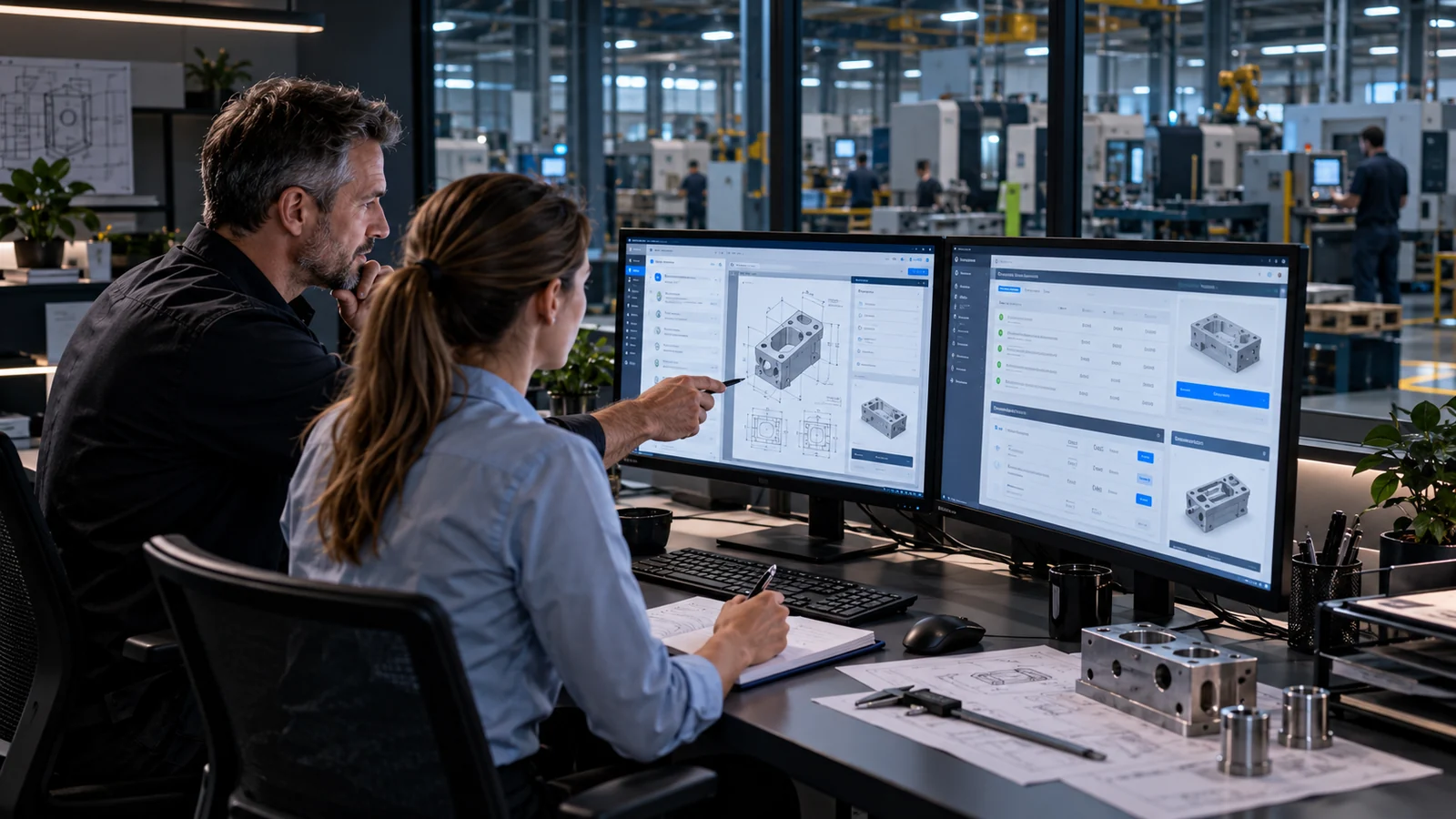
Many good tools – but separate workflows.
- Checking inquiries manually
- Entering data multiple times
- Drawings and technical documents kept separate
- Planning scattered
- Production status hard to see centrally
- Manual handovers between office, engineering and production
One end-to-end digital process.
- The inquiry is structured and sources stay traceable
- Open questions become visible and are prepared as a draft
- Quote and costing are prepared and access the same data
- Engineering, CAD and mold data are reused
- Planning, production and machines/CAM were connected
- QA, warehouse, personnel and delivery were integrated into the same context – the delivery remains traceable
The example describes the functional expansion. Savings or lead-time improvements are deliberately not presented as fixed result figures.
Start modularly. Expand selectively.
1. Choose a bottleneck
Start with the area that causes the most manual effort today.
2. Connect the data flow
Don’t reinvent information – use existing sources and systems.
3. Keep approvals in place
Let automation do the preparation; deliberately leave important decisions with people.
4. Expand afterwards
Add further modules, roles, machines and integrations once the benefit and process are clear.
Which 2–3 processes cost the most time today?
That is exactly where the process analysis begins – with your real workflows, not with a standard demo.