Component & formwork
3D models and a mould generator covering casting orientation, visible faces, parts, joints and revisions. Workshop packs and drawings connect geometry to production status.
The existing process chain connects component and mould planning to the workshop, machines, quality and delivery.
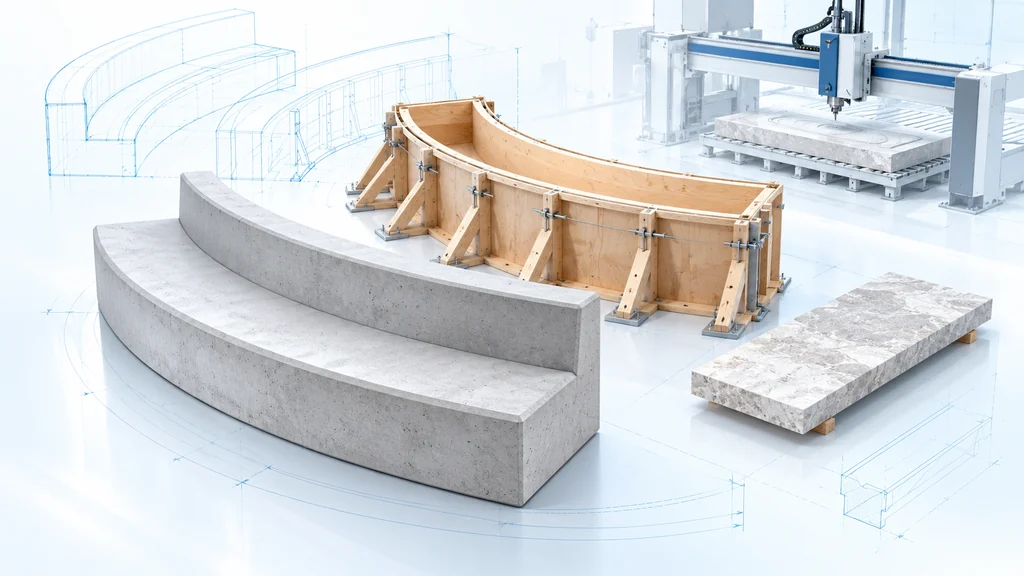
Enquiries, bills of quantities, technical drawings and CAD data provide components, requirements and clarification questions. The shared project record brings documents and decisions together.
3D models and a mould generator covering casting orientation, visible faces, parts, joints and revisions. Workshop packs and drawings connect geometry to production status.
CAD/Inventor integration, material and panel optimisation, CAM toolpaths, gantry milling, CNC and robotics in the specific machine context. Checks and approvals accompany changes.
Production planning, quality and traceability, storage locations, yard overview, forklift movements, picking, trucks and delivery notes. Invoicing, payment and project costs complete the workflow.
A component connects to its mould revision, bill of materials and material plan. Drawings and machining information go to the workshop; checks, stock movements and delivery remain traceable at component level. Existing product illustrations and industry capabilities are retained.
Synthetic demonstration, not a customer reference.
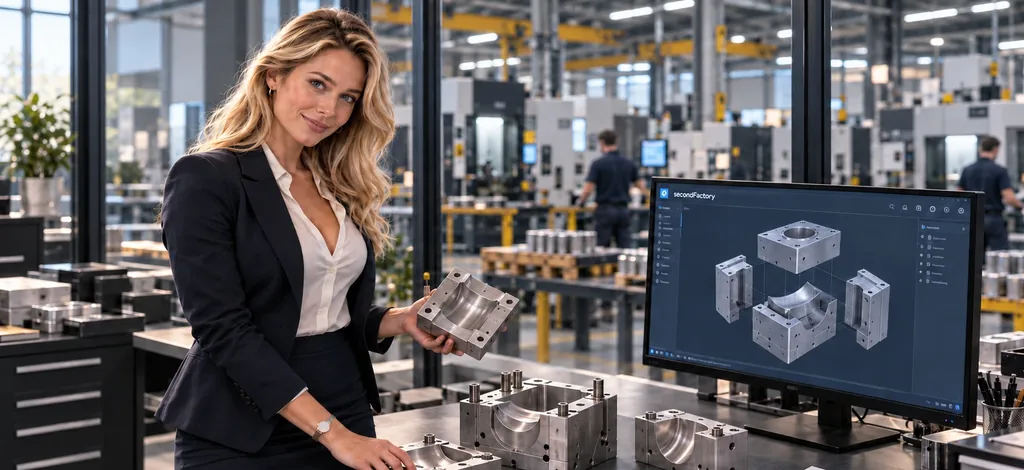
Existing CAD, CNC and robot interfaces are adapted to the specific machine, fixture and controller. Automated cutting-cell planning extends existing workflows through simulation and investment comparison.
Mould and machine release depend on geometry, material, workshop parameters and the specific machine. A planned automated cell is shown as a simulation, without implying an already commissioned customer installation.
secondFactory is ready for use and live demonstration. We show the relevant workflow and discuss your data, machines and integrations.